
• Cart
    • Quote
    • Inquiry
USA
    • Cart
    • Quote
    • Inquiry
USA
Novogene
  • Novogene
  • Genomics
    • Human Whole Genome Sequencing
    • Whole Exome Sequencing
    • Plant and Animal Whole Genome Sequencing
    • Microbial Whole Genome Sequencing

    Metagenomics

    • Shotgun Metagenomics Sequencing
    • Amplicon Sequencing

    Transcriptomics

    • mRNA Sequencing
    • Swift & Express mRNA Sequencing New!
    • Full-Length Transcriptome Sequencing
    • Prokaryotic RNA Sequencing
    • Metatranscriptome Sequencing
    • Total RNA Sequencing
    • Small RNA Sequencing (sRNA‑seq)
    • Whole Transcriptome Sequencing

    Single Cell & Spatial Omics

    • 10x Single Cell Gene Expression
    • Illumina PIP-seq Single Cell 3’ RNA Sequencing New!
    • Spatial Transcriptomics Sequencing New!

    Epigenomics

    • Whole Genome Bisulfite Sequencing (WGBS)
    • Enzymatic Methylation Sequencing
    • Directed Methylation Sequencing (DM-Seq) New!
    • RNA Immunoprecipitation Sequencing (RIP-seq)
    • Chromatin Immunoprecipitation Sequencing (ChIP-seq)
    • Cleavage Under Targets & Tagmentation (CUT&Tag) New!
    • Assay for Transposase-Accessible Chromatin with Sequencing (ATAC-seq)
    • Reduced Representation Bisulfite Sequencing (RRBS)

    Proteomics

    • Quantitative Proteomics New!
    • PTM Proteomics New!
    • Olink Proteomics New!

    Metabolomics

    • Untargeted Metabolomics

    Premade Library

    • Sequencing Only on Illumina Sequencer
    • Sequencing Only on Ultima Sequencer
  • PromotionsPromotions
    • Platforms
    • Service & Support
    • Automated Delivery Platform (Falcon)
    • Bioinformatics Analysis Tool (NovoMagic)
    • Customer Service System (CSS)
    • Case Study
    • Blog
    • Webinar
    • Brochure
    • Cancer Research
    • Immuno-oncology
    • Agrigenomics
    • Environment
    • Food Science
    • Human Microbiome
    • Plant and Animal Microbiome
    • Drug Discovery and Development
    • Rare and Complex Diseases
    • About Us
    • Our Locations
    • News & Events
    • Careers
  • Contact UsContact Us
    • mRNA Sequencing
    • Illumina Lane Sequencing
  1. Home
  2. Resources
  3. Blog
  4. DIA Proteomics: What It Is, How It Works, and When to Use It

DIA Proteomics: What It Is, How It Works, and When to Use It

If you are planning a mass spectrometry (MS) based quantitative proteomics study, you have probably come across the term data-independent acquisition (DIA). DIA has become a foundational acquisition strategy in modern quantitative proteomics, particularly for large-cohort studies and biomarker research.

This guide explains what DIA is, outlines the workflow from sample preparation through data analysis, and highlights its advantages over alternative quantitative approaches.

Overview of DIA Proteomics

In bottom-up proteomics, proteins are digested into peptides and separated by liquid chromatography before entering the mass spectrometer. The instrument then determines which precursor ions or mass-to-charge windows will undergo MS2 fragmentation. This selection strategy represents the fundamental difference between the two major acquisition modes.

A common strategy is data-dependent acquisitions (DDA), in which the top N most intense precursors detected in the survey scan are selected for MS2 fragmentation during the acquisition cycle. The remaining precursors are not selected for fragmentation. DDA produces relatively clean MS2 spectra that are well suited for direct database searching. However, precursor selection depends on real-time signal intensity, which can fluctuate because of variations in spray stability and ion suppression.

Even for the same sample, moderately abundant peptides may be detected in some runs and absent in others. Importantly, the resulting missing values are not random. Low-abundance proteins are disproportionately affected, and statistical methods cannot fully recover measurements that were never acquired.

DIA eliminates real-time ion selection. The instrument divides the precursor m/z range into predefined windows and cyclically isolates and fragments all precursor ions within each window, repeating the process until the entire range is covered. Because the identical acquisition schedule is applied to every sample, the same peptides are targeted in every run, which directly addresses the stochastic missing-value problem of DDA.

The tradeoff is that each MS2 spectrum contains fragments from multiple co-isolated peptides, shifting much of the analytical complexity to computational deconvolution. This can be accomplished using either experimentally generated spectral libraries or computationally predicted spectra. The latter is commonly described as library-free analysis, with directDIA representing one implementation.

· Library-based DIA: a project- or matrix-specific library is built first (typically via high-pH fractionated DDA runs of pooled samples). It adds identification depth and specificity at the cost of an extra preparation stage.

· Library-free (direct) DIA: search against predicted spectra, skipping the library build. With modern instruments and software, library-free workflows perform close to library methods for most applications and are far simpler to operationalize.

· Library-free DIA enhances the capabilities of traditional DIA, which relies on narrow isolation windows, by reducing or eliminating co-isolation interference, delivering cleaner MS2 spectra, and removing the requirement for a DDA-based reference library. At Novogene, our quantitative services (Deep/Rapid DIA) are based on this library-free DIA platform.

For a detailed side-by-side comparison, see our DIA vs DDA proteomics guide.
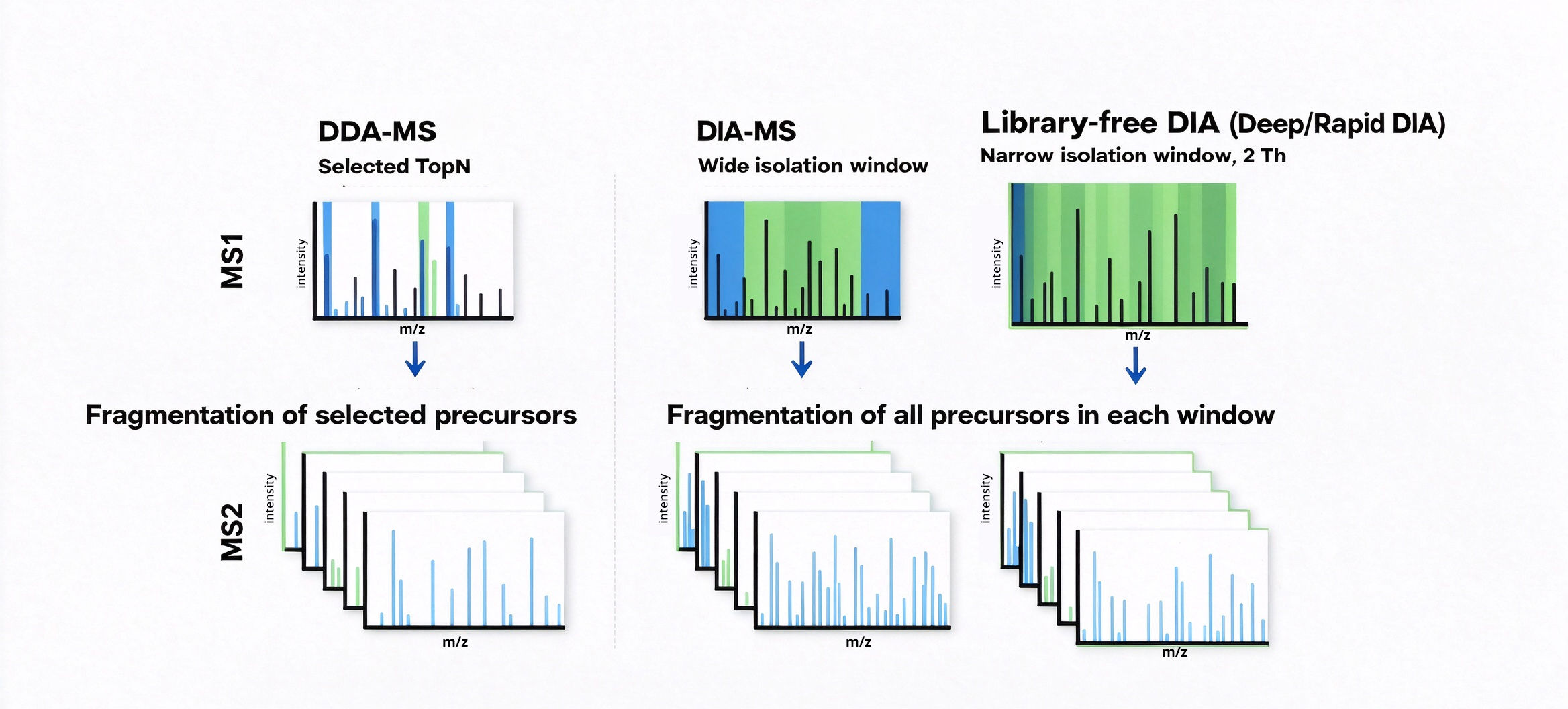
Figure 1: The diagram of DDA, DIA and Deep/Rapid DIA

DIA Proteomics Workflow: From Sample to Report

Step-by-Step Pipeline

The standard DIA proteomics pipeline follows a complete LC-MS/MS workflow:

· Sample Proteins Extraction: Extract proteins from a wide range of biological samples, such as tissue, blood, or cell cultures.

· Protein Digestion and Desalting: Digest the extracted proteins into peptides using enzymes, then desalt the peptide mixture to remove contaminants.

· Mass Spectrometry Detection: Analyze peptides using the Astral platform to generate detailed spectral data.

· Data Analysis: Use specialized software to process the MS data, enabling the identification and quantification of proteins in the sample.

Figure 2: The workflow of DIA proteomics

Novogene provides two optimized service forms: Deep DIA for maximum proteome coverage and Rapid DIA for fast, cost-effective routine quantitative profiling.

Core Benefits of DIA Proteomics

Comprehensive, re-analyzable proteome data: DIA systematically captures nearly all peptides in samples without ion-selection bias, greatly reducing missing values (In our Astral benchmarks, protein-level missing values remained below 10%). Raw DIA files can be reprocessed later to mine new targets or remove interference, which cannot be achieved with conventional DDA.

Deeper coverage for low-abundance proteins: Free from the stochastic selection bias of DDA, DIA delivers higher sensitivity to detect low-abundance peptides linked to biological or disease phenotypes (In our Astral benchmarks, a single injection recovers 8,358–11,778 protein groups). It avoids the high cost and variability brought by heavy fractionation.

Excellent reproducibility for large-cohort studies: The fixed acquisition scheme ensures consistent sampling run after run and high data completeness (In our Astral benchmarks, 76–93% stay within 20% CV). Superior reproducibility and stable quantification make DIA well-suited for large-scale, multi-group and longitudinal proteomics projects.

Unbiased, versatile detection supporting discovery and targeted workflows: DIA collects data in an unbiased manner without pre-defined targets. It can identify and quantify protein isoforms, post-translational modifications and cleavage fragments, supporting both hypothesis-free discovery and targeted quantitative proteomics.

Where DIA Proteomics Is Used

· Cohort biomarker discovery: Suitable for 50 to thousands of samples with subtle biological effects; high data completeness ensures reliable statistical power.

· Preclinical pharmacology & toxicology: Dose-response and mechanism-of-action studies with large sample volumes beyond DDA or TMT capacity.

· Large-scale PTM profiling: Phosphorylation, glycosylation and other enriched modification cohorts across multiple experimental conditions.

· Longitudinal, time-course and dose-response studies: Low missing values reduce bias from data imputation for within-subject comparisons.

· Multi-omics integration: Well-matched, complete protein matrices support robust correlation analysis together with RNA-seq and other omics data.

Novogene Library-free DIA Quantitative Proteomics Services

Novogene provides library-free DIA quantitative proteomics powered by the Astral platform. We offer Deep DIA and Rapid DIA to fit different goals.

TechniqueMS PlatformTechnical FeaturesApplications
Deep DIAOrbitrap Astral (60 SPD*)Provides accurate, reproducible quantification of low-abundance proteins and scales to large cohorts.Ideal for biomarker discovery, multi-omics integration, and studies requiring deep proteome coverage.
Rapid DIAOrbitrap Astral (180 SPD*)Provides a fast workflow with balanced quantitative performance and reliable repeatability for large cohorts.Suitable for routine quantitative projects, screening studies, and projects with tight timelines.

* SPD: Sample per day

Our end-to-end service covers sample processing, MS acquisition and bioinformatics interpretation. Contact our proteomics team to design your DIA proteomics project.

ServicesServices menu

CompanyCompany menu

Contact UsContact Us menu

Service SupportService Support menu

Services
mRNA SequencingSwift & Express mRNA SequencingTotal RNA SequencingHuman Whole Genome SequencingWhole Exome Sequencing10x Single Cell Gene ExpressionIllumina PIP-seq Single Cell 3’ RNA SequencingSpatial Transcriptomics SequencingWhole Genome Bisulfite Sequencing (WGBS)Quantitative ProteomicsUntargeted MetabolomicsShotgun Metagenomics SequencingMetatranscriptome SequencingSequencing Only on Illumina SequencerSequencing Only on Ultima SequencerFull-Length Transcriptome SequencingChromatin Immunoprecipitation Sequencing (ChIP-seq)
Company
About UsOur LocationsNews & EventsCareers
Contact Us
Contact Us
Service Support
Automated Delivery Platform (Falcon)Bioinformatics Analysis Tool (NovoMagic)Customer Service System (CSS)
LinkedInLinkedIn hoverYouTubeYouTube hoverXX hoverMetaMeta hoverInstagramInstagram hover
Copyright © 2026 Novogene Corporation Inc. All rights reserved. For Research Use Only.
    • Cart
    • Quote
    • Inquiry
USA
    • Cart
    • Quote
    • Inquiry
USA
Novogene
  • Novogene
  • Genomics
    • Human Whole Genome Sequencing
    • Whole Exome Sequencing
    • Plant and Animal Whole Genome Sequencing
    • Microbial Whole Genome Sequencing

    Metagenomics

    • Shotgun Metagenomics Sequencing
    • Amplicon Sequencing

    Transcriptomics

    • mRNA Sequencing
    • Swift & Express mRNA Sequencing New!
    • Full-Length Transcriptome Sequencing
    • Prokaryotic RNA Sequencing
    • Metatranscriptome Sequencing
    • Total RNA Sequencing
    • Small RNA Sequencing (sRNA‑seq)
    • Whole Transcriptome Sequencing

    Single Cell & Spatial Omics

    • 10x Single Cell Gene Expression
    • Illumina PIP-seq Single Cell 3’ RNA Sequencing New!
    • Spatial Transcriptomics Sequencing New!

    Epigenomics

    • Whole Genome Bisulfite Sequencing (WGBS)
    • Enzymatic Methylation Sequencing
    • Directed Methylation Sequencing (DM-Seq) New!
    • RNA Immunoprecipitation Sequencing (RIP-seq)
    • Chromatin Immunoprecipitation Sequencing (ChIP-seq)
    • Cleavage Under Targets & Tagmentation (CUT&Tag) New!
    • Assay for Transposase-Accessible Chromatin with Sequencing (ATAC-seq)
    • Reduced Representation Bisulfite Sequencing (RRBS)

    Proteomics

    • Quantitative Proteomics New!
    • PTM Proteomics New!
    • Olink Proteomics New!

    Metabolomics

    • Untargeted Metabolomics

    Premade Library

    • Sequencing Only on Illumina Sequencer
    • Sequencing Only on Ultima Sequencer
  • PromotionsPromotions
    • Platforms
    • Service & Support
    • Automated Delivery Platform (Falcon)
    • Bioinformatics Analysis Tool (NovoMagic)
    • Customer Service System (CSS)
    • Case Study
    • Blog
    • Webinar
    • Brochure
    • Cancer Research
    • Immuno-oncology
    • Agrigenomics
    • Environment
    • Food Science
    • Human Microbiome
    • Plant and Animal Microbiome
    • Drug Discovery and Development
    • Rare and Complex Diseases
    • About Us
    • Our Locations
    • News & Events
    • Careers
  • Contact UsContact Us
    • mRNA Sequencing
    • Illumina Lane Sequencing
  1. Home
  2. Resources
  3. Blog
  4. DIA Proteomics: What It Is, How It Works, and When to Use It

DIA Proteomics: What It Is, How It Works, and When to Use It

If you are planning a mass spectrometry (MS) based quantitative proteomics study, you have probably come across the term data-independent acquisition (DIA). DIA has become a foundational acquisition strategy in modern quantitative proteomics, particularly for large-cohort studies and biomarker research.

This guide explains what DIA is, outlines the workflow from sample preparation through data analysis, and highlights its advantages over alternative quantitative approaches.

Overview of DIA Proteomics

In bottom-up proteomics, proteins are digested into peptides and separated by liquid chromatography before entering the mass spectrometer. The instrument then determines which precursor ions or mass-to-charge windows will undergo MS2 fragmentation. This selection strategy represents the fundamental difference between the two major acquisition modes.

A common strategy is data-dependent acquisitions (DDA), in which the top N most intense precursors detected in the survey scan are selected for MS2 fragmentation during the acquisition cycle. The remaining precursors are not selected for fragmentation. DDA produces relatively clean MS2 spectra that are well suited for direct database searching. However, precursor selection depends on real-time signal intensity, which can fluctuate because of variations in spray stability and ion suppression.

Even for the same sample, moderately abundant peptides may be detected in some runs and absent in others. Importantly, the resulting missing values are not random. Low-abundance proteins are disproportionately affected, and statistical methods cannot fully recover measurements that were never acquired.

DIA eliminates real-time ion selection. The instrument divides the precursor m/z range into predefined windows and cyclically isolates and fragments all precursor ions within each window, repeating the process until the entire range is covered. Because the identical acquisition schedule is applied to every sample, the same peptides are targeted in every run, which directly addresses the stochastic missing-value problem of DDA.

The tradeoff is that each MS2 spectrum contains fragments from multiple co-isolated peptides, shifting much of the analytical complexity to computational deconvolution. This can be accomplished using either experimentally generated spectral libraries or computationally predicted spectra. The latter is commonly described as library-free analysis, with directDIA representing one implementation.

· Library-based DIA: a project- or matrix-specific library is built first (typically via high-pH fractionated DDA runs of pooled samples). It adds identification depth and specificity at the cost of an extra preparation stage.

· Library-free (direct) DIA: search against predicted spectra, skipping the library build. With modern instruments and software, library-free workflows perform close to library methods for most applications and are far simpler to operationalize.

· Library-free DIA enhances the capabilities of traditional DIA, which relies on narrow isolation windows, by reducing or eliminating co-isolation interference, delivering cleaner MS2 spectra, and removing the requirement for a DDA-based reference library. At Novogene, our quantitative services (Deep/Rapid DIA) are based on this library-free DIA platform.

For a detailed side-by-side comparison, see our DIA vs DDA proteomics guide.

Figure 1: The diagram of DDA, DIA and Deep/Rapid DIA

DIA Proteomics Workflow: From Sample to Report

Step-by-Step Pipeline

The standard DIA proteomics pipeline follows a complete LC-MS/MS workflow:

· Sample Proteins Extraction: Extract proteins from a wide range of biological samples, such as tissue, blood, or cell cultures.

· Protein Digestion and Desalting: Digest the extracted proteins into peptides using enzymes, then desalt the peptide mixture to remove contaminants.

· Mass Spectrometry Detection: Analyze peptides using the Astral platform to generate detailed spectral data.

· Data Analysis: Use specialized software to process the MS data, enabling the identification and quantification of proteins in the sample.

Figure 2: The workflow of DIA proteomics

Novogene provides two optimized service forms: Deep DIA for maximum proteome coverage and Rapid DIA for fast, cost-effective routine quantitative profiling.

Core Benefits of DIA Proteomics

Comprehensive, re-analyzable proteome data: DIA systematically captures nearly all peptides in samples without ion-selection bias, greatly reducing missing values (In our Astral benchmarks, protein-level missing values remained below 10%). Raw DIA files can be reprocessed later to mine new targets or remove interference, which cannot be achieved with conventional DDA.

Deeper coverage for low-abundance proteins: Free from the stochastic selection bias of DDA, DIA delivers higher sensitivity to detect low-abundance peptides linked to biological or disease phenotypes (In our Astral benchmarks, a single injection recovers 8,358–11,778 protein groups). It avoids the high cost and variability brought by heavy fractionation.

Excellent reproducibility for large-cohort studies: The fixed acquisition scheme ensures consistent sampling run after run and high data completeness (In our Astral benchmarks, 76–93% stay within 20% CV). Superior reproducibility and stable quantification make DIA well-suited for large-scale, multi-group and longitudinal proteomics projects.

Unbiased, versatile detection supporting discovery and targeted workflows: DIA collects data in an unbiased manner without pre-defined targets. It can identify and quantify protein isoforms, post-translational modifications and cleavage fragments, supporting both hypothesis-free discovery and targeted quantitative proteomics.

Where DIA Proteomics Is Used

· Cohort biomarker discovery: Suitable for 50 to thousands of samples with subtle biological effects; high data completeness ensures reliable statistical power.

· Preclinical pharmacology & toxicology: Dose-response and mechanism-of-action studies with large sample volumes beyond DDA or TMT capacity.

· Large-scale PTM profiling: Phosphorylation, glycosylation and other enriched modification cohorts across multiple experimental conditions.

· Longitudinal, time-course and dose-response studies: Low missing values reduce bias from data imputation for within-subject comparisons.

· Multi-omics integration: Well-matched, complete protein matrices support robust correlation analysis together with RNA-seq and other omics data.

Novogene Library-free DIA Quantitative Proteomics Services

Novogene provides library-free DIA quantitative proteomics powered by the Astral platform. We offer Deep DIA and Rapid DIA to fit different goals.

TechniqueMS PlatformTechnical FeaturesApplications
Deep DIAOrbitrap Astral (60 SPD*)Provides accurate, reproducible quantification of low-abundance proteins and scales to large cohorts.Ideal for biomarker discovery, multi-omics integration, and studies requiring deep proteome coverage.
Rapid DIAOrbitrap Astral (180 SPD*)Provides a fast workflow with balanced quantitative performance and reliable repeatability for large cohorts.Suitable for routine quantitative projects, screening studies, and projects with tight timelines.

* SPD: Sample per day

Our end-to-end service covers sample processing, MS acquisition and bioinformatics interpretation. Contact our proteomics team to design your DIA proteomics project.

ServicesServices menu

CompanyCompany menu

Contact UsContact Us menu

Service SupportService Support menu

Services
mRNA SequencingSwift & Express mRNA SequencingTotal RNA SequencingHuman Whole Genome SequencingWhole Exome Sequencing10x Single Cell Gene ExpressionIllumina PIP-seq Single Cell 3’ RNA SequencingSpatial Transcriptomics SequencingWhole Genome Bisulfite Sequencing (WGBS)Quantitative ProteomicsUntargeted MetabolomicsShotgun Metagenomics SequencingMetatranscriptome SequencingSequencing Only on Illumina SequencerSequencing Only on Ultima SequencerFull-Length Transcriptome SequencingChromatin Immunoprecipitation Sequencing (ChIP-seq)
Company
About UsOur LocationsNews & EventsCareers
Contact Us
Contact Us
Service Support
Automated Delivery Platform (Falcon)Bioinformatics Analysis Tool (NovoMagic)Customer Service System (CSS)
LinkedInLinkedIn hoverYouTubeYouTube hoverXX hoverMetaMeta hoverInstagramInstagram hover
Copyright © 2026 Novogene Corporation Inc. All rights reserved. For Research Use Only.
Your Privacy ChoicesPrivacy PolicyCookie PolicyCareers